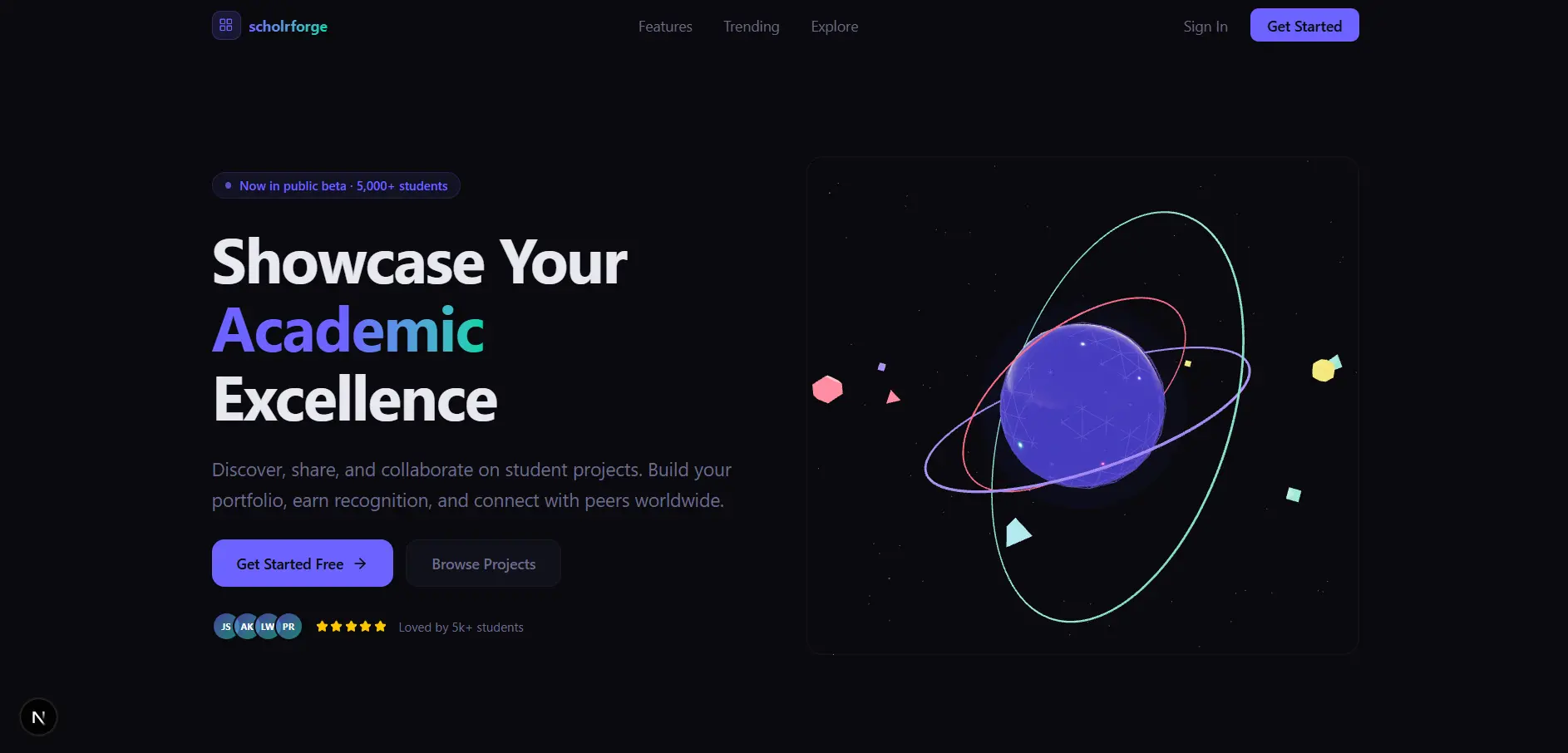
ScholrForge is an AI-assisted academic writing platform concept built around a Spring Boot backend and PostgreSQL. Its intended workflow guides a user from an initial research idea towards a more structured draft, with AI support used as an aid rather than a replacement for the user's own judgement. The project is designed around the idea that research work benefits from clear stages, saved progress, and a way to keep related material together. Since this is a prototype or planned project, the features below describe the intended direction and should not be read as a claim that every part is fully implemented.
The problem
Academic writing is not just about generating paragraphs. Students often need to narrow a topic, organise source material, decide on a structure, and revise a draft without losing track of the original argument. Moving between disconnected tools can make that process harder to manage.
The solution
ScholrForge is a prototype concept for bringing research planning and AI-assisted drafting into a guided workflow. The planned backend uses Spring Boot, with PostgreSQL for application data and AI APIs for writing assistance. The intention is to help users develop their work in stages rather than rely on a single prompt to produce an entire document.
What it does
- Planned AI-assisted drafting for academic content
- A guided workflow for organising research and writing
- A proposed user account and saved-work experience
- An intended export path for completed drafts
- PostgreSQL as the planned store for application data
What was hard
The central design challenge is making AI output useful without treating every response as automatically correct or academically suitable. A practical implementation would need to keep prompts and user context organised, handle API failures and slow responses, and make it clear that users remain responsible for checking facts, sources, and the final writing. The backend also needs a clear boundary between saved application data and content sent to an external AI service.
Results
The project explores how AI assistance could fit into a more deliberate academic workflow. It remains a prototype or planned concept, so the description focuses on its intended design rather than claiming measured productivity gains or presenting every proposed feature as production-ready.